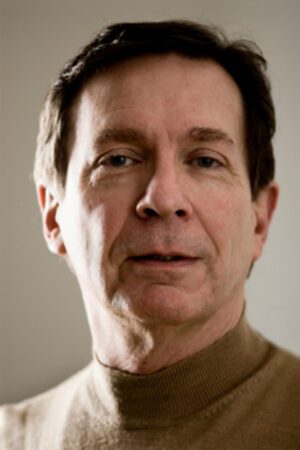
Alfred Corn, the prominent poet, translator, and teacher, asks the question I haven’t gotten to grips with here: “What Is This Thing called Poetry?” (See “alfred’s substack,” November 13.) This is something I’ve thought about a lot, so I won’t wait till after the holidays to try out an answer.
The first problem is that the genre “poetry” is not a genre; it’s a label that can be, and is, applied to almost any verbal product, covering an only slightly smaller territory than the word “writing”. Despite some fuzzy edges, we know what a novel is, a play, or a painting, or a film. But a collection of words is called a poem if somebody says it is—and signals that claim, usually, by breaking the text up into lines. Are we reduced to taking all such claims at face value, to defining poetry as lineated writing? The eminent Jane Hirshfield has said so.
One reaction to this bagginess is to insist, as the world once did, on meter, rhyme, and other formal structures as the sole basis of poetry. Some people yearn to go back to that cozy harbor; the criterion is, at least, objective. And the formalists have the virtue of accepting that language is a material, to be worked and worked on. But the definition-by-form leaves way too much out.
The second key problem is that the word “poetry” has always done double duty. It’s (supposedly) a particular kind of writing; it is also, and really primarily, a term of praise. To call something “poetic” means we like it.
Many often-quoted definitions of the art assume a kind of perfection. W. H. Auden called poetry “memorable speech”—never mind the fact that so much verse is forgettable. John Dryden spoke of “that which moves the sleeping images of things toward the light”; again, how much of what we read as poetry can be said to do that? Yeats spoke of “that dazzling, unforeseen, wingfoot wanderer.” Are we dazzled all the time?
Should the word “poetry” be reserved for masterpieces only? That doesn’t seem right, either—though it might be argued that it is the masterpieces justify the whole pursuit.
Here’s my best effort. “Poetry” is language that is marked by the attempt to arrive at “memorable speech.” Not all attempts will be successful. But there is a huge difference between work that reflects this effort, and work that does not.
I would call poetry any language with an unusual amount of value added. Form is one type of added value, but only one. Compared with typical prose, poetry is economical, and it is, in some manner, strange. Poetry works with connotations and emotional overtones; it need not be bound to logical structure; it excludes cliches; it makes surprising moves; it manipulates syntax for effect. The best of what is called prose works in these ways too, a bit more sparingly.
As an editor at the venerable all-poetry magazine Blue Unicorn, I see (and select) pieces that show writers struggling to generate poetic strangeness. I see (and select) quite a bit of good writing that might be classed as poetic prose. I see a few pieces that convince me entirely. And, inevitably, I see a lot of verbiage written by people who seem to have no idea of poetry as anything more than a kind of diary entry. Poetry as the easy fruit to pick. Poetry as anything goes.
Can we at least agree that poetry is more than that?
Leave a Reply